The rising popularity of montessori toys reflects a growing desire among parents to support their children’s development in meaningful ways. Inspired by Maria Montessori’s educational philosophy, these educational toys do more than entertain, they play a pivotal role in fostering independence, encouraging fine motor skill activities, and introducing practical life experiences. By prioritizing natural materials and sensory-rich features, these toys create an environment where curiosity and hands-on learning naturally flourish.
What defines a montessori toy?
Montessori toys stand out for their simplicity, purposeful design, and frequent use of wooden or other natural materials. Their main goal is to let children explore at their own pace, discovering new concepts without constant adult direction. This sets them apart from many modern toys that rely on lights, sounds, or scripted play scenarios.
Also read : Top Comfy Fabrics for an Active Day Out: Stay Stylish and Relaxed!
Instead, montessori toys invite tactile exploration and independent action. Whether stacking blocks or pouring water, these educational toys provide open-ended opportunities to practice reasoning and creativity. Each piece is thoughtfully crafted to encourage children to experience different textures, shapes, and colors while engaging multiple senses.
Benefits of montessori toys for early childhood development
Integrating montessori toys into daily routines offers benefits far beyond amusement. By enabling self-directed play and experimentation, these toys nurture essential skills that last a lifetime. For further inspiration, visit this site https://the-montessori-shop.com/ to discover a curated selection of Montessori materials and resources.
Have you seen this : Discover the Top UK Fashion Trends to Watch for This Upcoming Season!
Active involvement with sensory-rich materials supports not only cognitive growth but also emotional well-being. As children overcome small challenges, they gain confidence and develop autonomy within their environment.
Supporting fine motor skill activities and coordination
Many montessori toys focus on tasks like grasping, threading, or sorting. Repeated manipulation of wooden toys helps children improve hand-eye coordination and dexterity. For example, stringing beads requires precision and patience, strengthening finger muscles and control.
Activities such as fitting shapes into matching holes transform playtime into valuable fine motor skill activities, laying the foundation for writing, dressing, and other essential daily tasks.
Encouraging practical life activities and responsibility
Several montessori toys mimic real-life work, inviting children to participate in practical life activities. Miniature brooms or pouring sets allow kids to imitate household chores, reinforcing routines, responsibility, and respect for order.
Engaging in these activities boosts problem-solving abilities. Tasks like matching socks or transferring beans between containers require observation and decision-making, core elements of child development.
The importance of natural and sensory-rich materials
Wooden toys are central to most montessori collections, prized for their durability, warmth, and connection to nature. Children can appreciate each toy’s unique grain, weight, and texture, which sparks sensory interest and encourages close examination.
Natural materials such as wood, cotton, and metal stimulate touch, smell, and sight. Unlike plastics, these elements are typically safer and biodegradable, aligning with eco-friendly values. Sensory-rich materials encourage children to actively engage with their surroundings rather than passively consume digital content.
Examples of popular montessori toys using natural materials
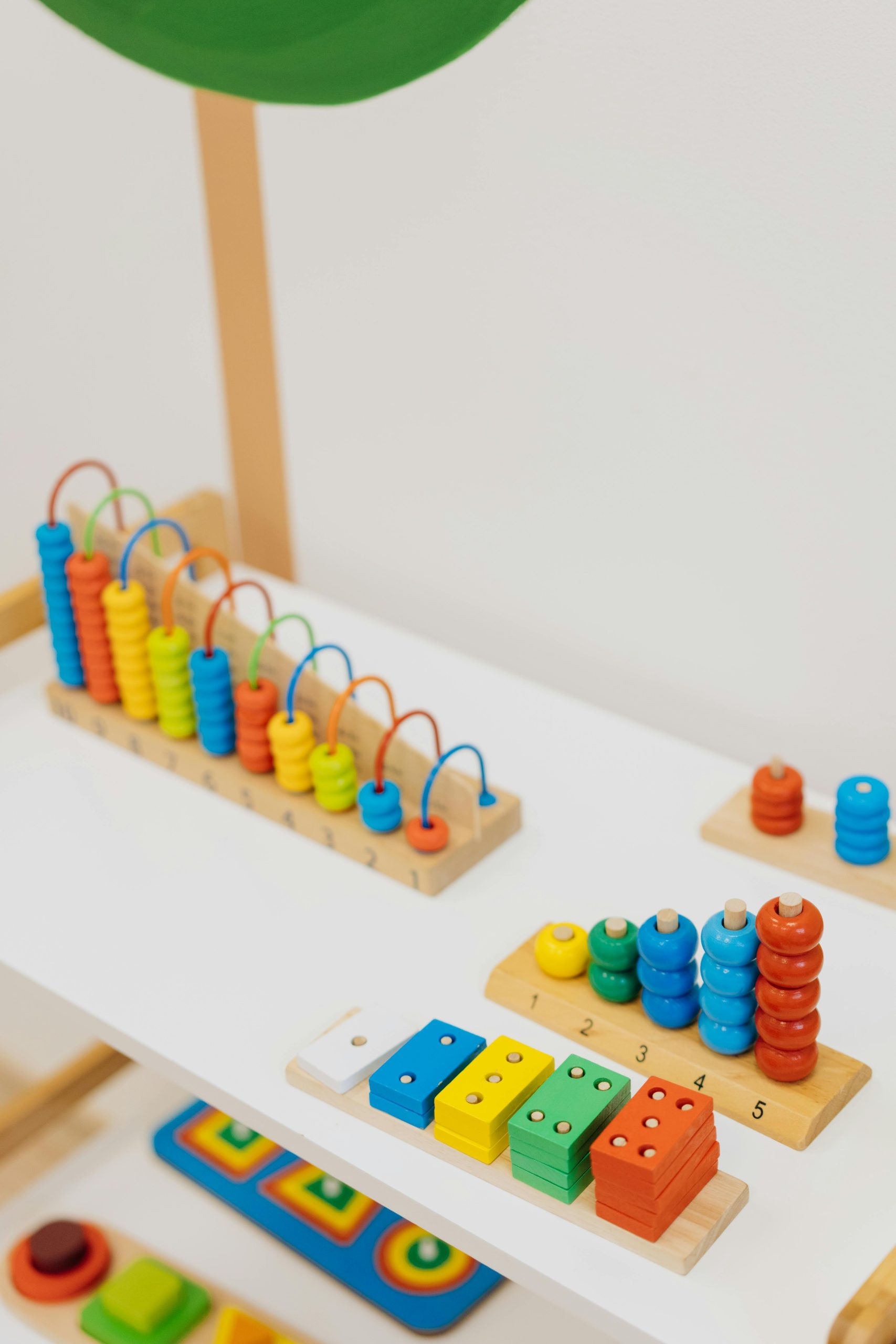
Classic choices include wooden stacking rings, shape sorters, and puzzles carved from quality timber. These toys foster focused engagement by breaking complex tasks into simple steps, reducing overstimulation. Soft balls or textured cloths made from wool or cotton enhance tactile experiences and broaden creative play.
This emphasis on authentic touch extends to items like musical instruments or balance boards crafted from untreated wood. Such toys challenge balance, rhythm, and cooperation, supporting both physical and social development.
Why sensory-rich environments matter for learning
Experts agree that stimulating several senses at once accelerates learning and memory formation. Sensory-rich environments created with montessori toys help children connect sound, sight, smell, and movement. When young learners hear, see, and feel differences among objects, they process information more deeply and retain new concepts longer.
Simple actions such as rolling marbles, smelling scented dough, or sorting colored pebbles expand a child’s perceptual skills. Over time, these experiences support dynamic brain development and lay the groundwork for higher learning.
How montessori toys promote independence and self-discovery
A core principle of Montessori education is to “follow the child,” empowering young minds to direct their own progress. Educational toys achieve this by offering manageable challenges children can tackle independently. Activities like building towers or organizing utensils don’t require constant supervision; instead, children make decisions and solve problems at their own pace.
This freedom serves two purposes: it builds self-confidence through accomplishment and allows parents to step back from micromanagement. Observers often notice that Montessori-educated children are more willing to start projects or adapt when facing obstacles.
- 🧩 Builds resilience through trial and error
- 👐 Fosters concentration during periods of quiet work
- 🎨 Inspires creative approaches to familiar tools
- 🌱 Encourages a love of learning from within
Choosing the best montessori toys for your home
Selecting suitable montessori toys involves following a few key principles. Choose items crafted from sturdy, non-toxic natural materials and avoid overly complicated designs. Opt for toys that target important developmental skills without overwhelming a child’s senses.
Offering variety is crucial, rotating toys every few weeks introduces fresh opportunities for discovery and keeps engagement high. Observing which toys capture your child’s interest reveals personal preferences and highlights developing strengths or areas needing support.
| 📏 Age range | 🌳 Material | 🛠️ Skill developed |
|---|---|---|
| 6–18 months | Wood, Fabric | Grasping, Texture exploration |
| 18m–3 years | Wood | Stacking, Coordination |
| 3–6 years | Metal, Wood | Practical life, Counting |
Answers to common questions about montessori toys
What are the main benefits of introducing montessori toys at an early age?
Introducing montessori toys early supports the development of independence, concentration, and problem-solving abilities. Hands-on experiences with natural materials strengthen fine motor skills and sensory awareness, providing lasting advantages for cognitive and emotional health.
- 👶 Early exposure to sensory-rich materials supports brain growth
- 🤲 Practice with practical life activities fosters adaptability and responsibility
- ✨ Opportunities for success build confidence and resilience
How do montessori toys differ from typical toys?
Unlike many mainstream toys, montessori toys are intentionally minimalist. They avoid distracting lights or sounds and focus on encouraging growth through purposeful activity. Wooden toys and other sensory-rich materials offer safer, sustainable alternatives to plastic gadgets.
| 🪄 Feature | 🧸 Montessori Toy | 🎮 Typical Toy |
|---|---|---|
| Material | Natural (wood, cotton) | Synthetic (plastic, electronics) |
| Purpose | Skill development | Entertainment |
| Design | Simple and open-ended | Bright, often noisy |
Can montessori toys be used alongside other educational toys?
Montessori toys complement a wide range of educational toys, as long as those toys allow for independent, hands-on learning. Mixing styles exposes children to diverse problem-solving methods and encourages varied types of play.
- 🌈 Rotate sensory-rich materials regularly for ongoing stimulation
- 🎲 Combine open-ended toys with puzzles or games for balanced learning
Which skills do montessori toys help children master?
These toys address a broad spectrum of development, emphasizing independence, fine motor skill activities, sensory exploration, coordination, and practical life competence. Children learn at their own pace and build confidence by overcoming each challenge.
- ✋ Fine motor coordination
- 🧠 Logical thinking and sequencing
- 🏡 Practical life competence
- 🔎 Curiosity-driven exploration
In summary, montessori toys provide an effective blend of independence, sensory exploration, and practical skill-building rooted in natural materials and purposeful design. Their thoughtful construction and open-ended nature not only spark curiosity but also lay strong foundations for lifelong learning and adaptability. As families seek enriching play options, exploring the world of montessori-inspired toys opens up new possibilities for every child’s unique journey.